

The Plague — er, um — EGG & I
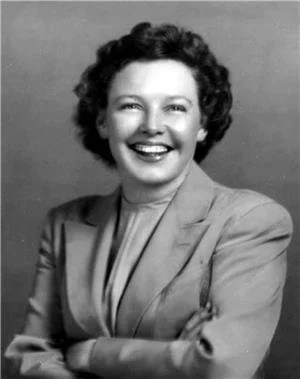
The wonderful and somewhat forgotten mid-20th century humorist, Betty MacDonald.
THIS MAY SEEM LIKE OLD-TIMEY FILM TRIVIA, BUT — really? The Egg & I is about the hit 1945 autobiography from the pen of Washington state humorist, Betty MacDonald.
To be sure, there’s lots of neat factoids surrounding the ten E&I films, only the first starring Claudette Colbert and Fred MacMurray. The latter thespian often played clean-as-a-whistle leading man, including his hit 1960-72 TV sitcom, My Three Sons. It can be argued that in real life, MacMurray enjoyed a not-too-delightful reputation amongst handymen.
Word got out he’d hire someone from the blue collar demographic for some Coldwater Canyon home project, then, fire them half-way through so he wouldn’t have to pay them. When a craftsman driving by would see a work truck in the actor’s driveway, they’d stop and leave a warning note to leave.
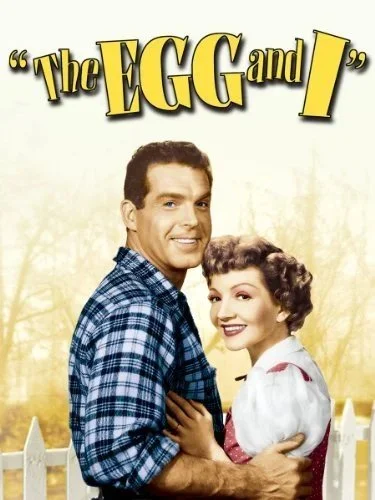
Before it was a giant mid-20th-century film series, The Egg & I was one of the hottest bestsellers of its era. Small World Dept.? My father-in-law, Ed Muhl, produced the film for Universal.
The original Egg & I franchise, co-starred the farm couple, Ma & Pa Kettle. Character actress Marjorie Main would earn an Oscar nom as Ma and who would star in all the flicks. MacDonald’s autobio would be on the bestseller lists for years (being No. 1 on The New York Times Bestseller List for 43 straight weeks!) and sell more than 3 million hardcover copies, with editions in 32 languages.
It would be reprinted every month for years. Author MacDonald received $100,000 for the film rights in 1945, which would be about $1.5 million today. Because of the then-dicey subject matter of the heroine’s divorce in the book, that particular part of the story wasn’t adapted to the screenplay. In real life, Betty’s alleged crumb of a hubbie was murdered in Northern California. We’re told Betty had all sorts of alibis. (:- )
MacDonald, her Lippincott publisher and a Seattle department store that sold the book were sued for nearly $1 million by members of a Washington-based Ketchum family and the local Native American Chimicum tribe. Both claimed they were unfairly characterized and subjected to ridicule. MacDonald settled out of court for a much smaller amount with the Ketchum family.
A Seattle judge, William Willkins, threw out the second, $1 million libel suit. MacDonald’s attorneys pointed out that one of the family members was simply trying to profit from the fame of being associated with the films. Seems the fellow, who played the character, “Crowbar,” had appeared in a local community theater performance with a pair of chickens under his armpits.
Oh. Justice Willkins? He had been one of the jurists on the famous post-World War II Nurenberg Nazi trial.
Like many writers, famous and not-so, Betty MacDonald (perhaps as in, “Old MacDonald had a you-know-what?) was not her real name. The author’s birth certificate handle was a tad more Shakespearean — Anne Elizabeth Campbell Bard.
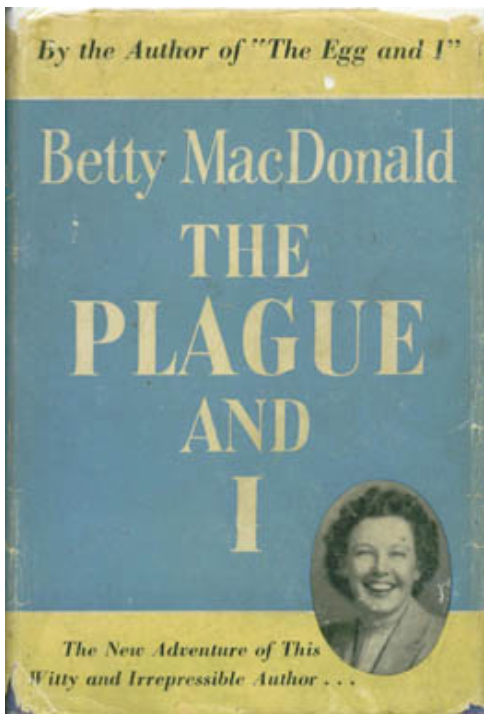
If there were ever a writer who could make fun of themselves having the plague, it would be Betty…
MacDonald wrote several other books, including the autobiographical recollections of staying in a Washington-state sanatorium for tuberculosis sufferers. Her book was entitled, The Plague and I.
The New York Times paragraphist who reviewed P&I wrote:
“Betty MacDonald … apparently can extract more amusement out of a nasty experience than most people can corral out from a trip to the circus…the artistry of her style, the infectious gaiety of her perspective, and the sensitive understanding she extends to any person she comes in contact with…assures a good deal of pleasure and vital knowledge even though as a subject the plague’s the thing.”
However, rotten little carrion feeders they can be, in 1984, a different NYT followed up, calling MacDonald’s The Plague and I — “undeservedly forgotten.”
Born on March 26, 1907 in Boulder, Colorado, MacDonald died young at 50 on February 7, 1958.