

In Lament of the Missing American Heroes, Bugs, Daffy & Bullwinkle
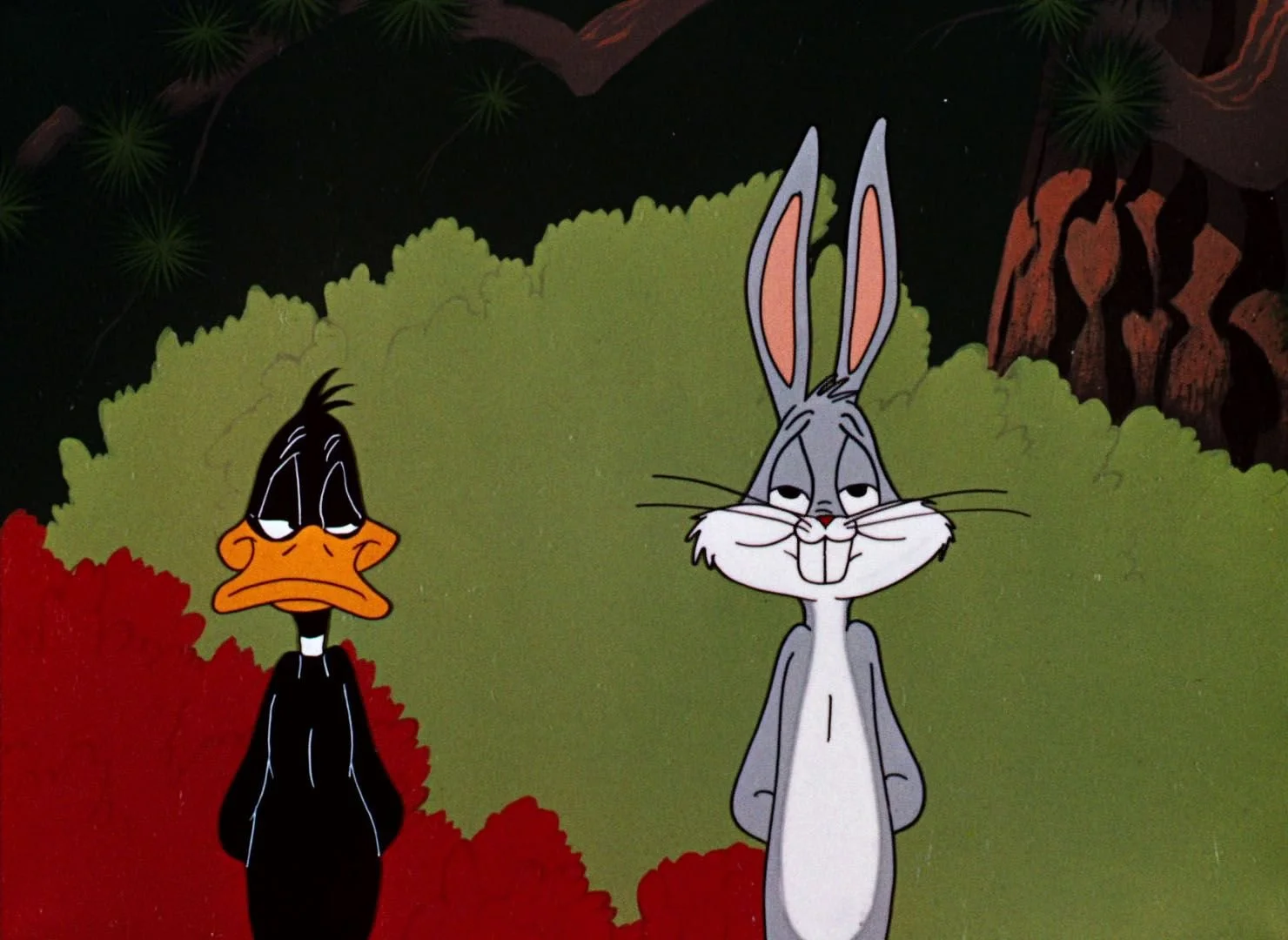
THE ‘DITH-PICK-ABLE’ AND THE ‘WASCALLY’ — Two American heroes, Daffy Duck and Bugs Bunny. / Warner Bros. cartoons
WHERE’S BUGS AND BULLWINKLE? — The ducks, Daffy and Donald? Professor Peabody (the world’s smartest talking dog) and those affable mice — Jerry, Mighty and Mickey? We even had a cartoon Superman. Surprise to some, he didn’t wear the funereal black back then.
The modern animated hero, the one some of us leave our children alone with, is an X-rated lout and pervert, represented by Butthead, Stan Marsh and friends from “South Park,” “SpongeBob SquarePants,” and lately, a long woke list from Walt Disney.
Granted. One can point to the freefall use of TNT in the old Warner Brothers cartoons. A forlorn Sylvester the Cat holds an exploding stick of dynamite an inch away from his face and the forever optimistic Wile E. Coyote plummets thousands of feet off a desert cliff, hits the dirt, takes a moment to stare at the camera before a multi-ton boulder lands atop of his head.
I always had a bone to pick with the creators of the wild dog of the American wastelands and his nemesis, The Roadrunner. Long before there was an Amazon, Wile E. Coyote did his mail order shopping at the one-stop-shopping outlet, Acme. The suspicious part of me always wondered. I never saw pockets in his mangy hide, hence, no place to hide a credit card. Never saw a deliveryman demanding C.O.D. How did the omnivore pay for all the rockets, dirigibles, trampolines and endless oceans of paint, brushes and rollers?
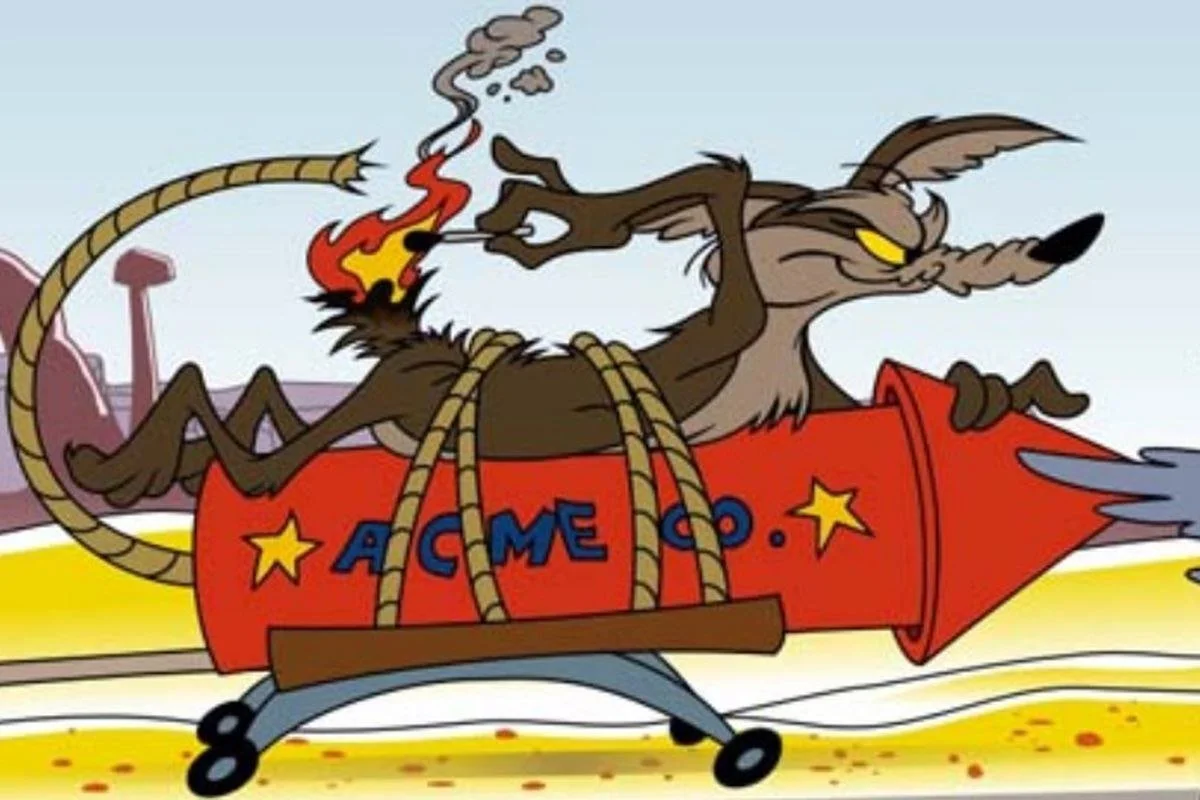
THE PRECURSOR TO AMAZON — Special kudos to the flea-bitten desert dog, Wile E. Coyote, who actually launched the general mail order business with his deep pockets support to the cartoon retail giant, Acme Co. / Warner Bros. cartoons
A deeper thought?
The craven Wile E. spent a fortune on all these Rube Goldberg devices, just to capture, and, I’m guessing, eat, that 99% gristle-&-feathers Roadrunner. I suppose, in part, it was because both my parents were criminally inept chefs and, even as a child, I was aware of a company called Omaha Steaks. The red meat company would rush a 5-pound rib eye anywhere in the continental U.S., no questions asked. Why didn’t Wile E. just order a rack of ribs? And See’s Candy for dessert?
I mean, the scrawny little scavenger had the ability to read factory manuals and create a bicycle attached to a weather balloon, powered by an electric fan with a really long extension cord. Despite not having opposable thumbs, Señor Coyote even was able to figure out how to strap on a motorcycle helmet. For the money spent on these contraptions, the wild and flea-bitten dog could have purchased a few hundred thousand boxes of mac and cheese along with the cookware to prepare it.
But, drat. I so admired Wile E. Coyote’s pluckiness and would submit that it was he, not that bird-brained, dullard roadrunner, who was the hero of the series, not the other way around. The definition of a hero? That, doomed to failure, the hero tries anyway. That heroism got us through two 20th-century world wars, the Great Depression and communism. That heroism effortlessly drove a swashbuckling little Tweedie Bird to best Sylvester the black-&-white house cat.
It’s hard, if not impossible, for me to watch most modern cartoons. There’s an undercurrent of smarminess, smugness, vulgarity. These animated plays some allow their children to watch mimic society, one that worships the lowest common denominator.
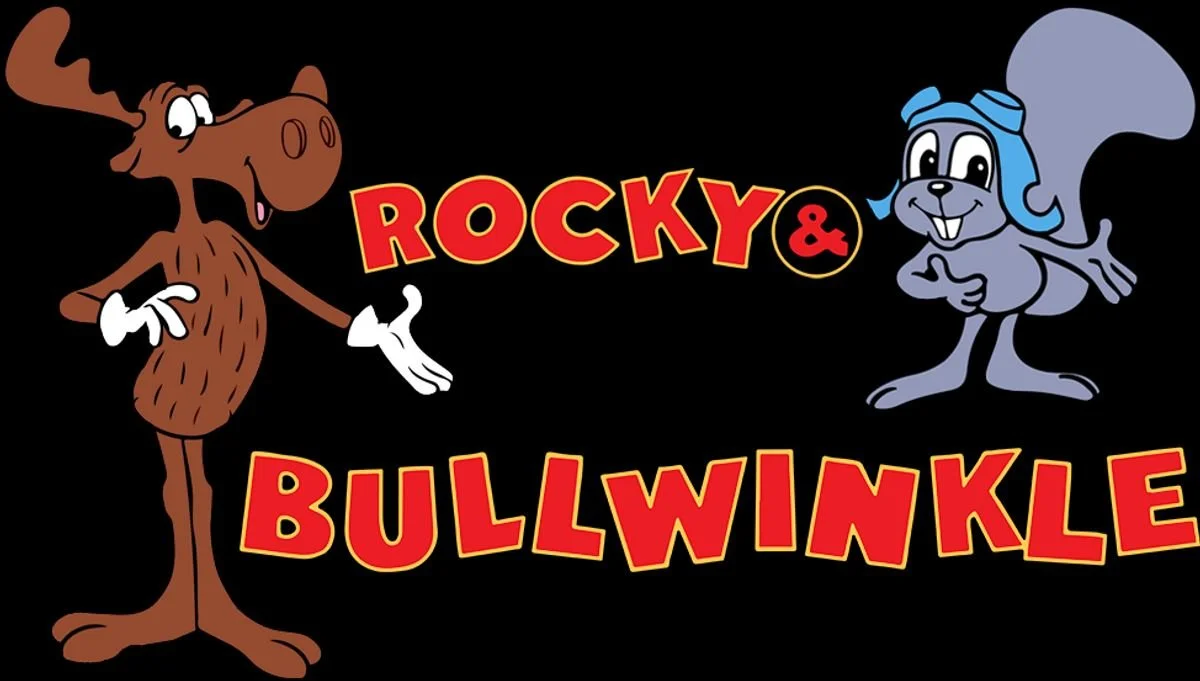
FROM THE FROZEN LAND OF PRE-SOMALIAN FRAUD — sprang Minnesota’s greatest citizens, Bullwinkle the Moose and Rocky, the Flying Squirrel. / J. Ward Productions
And, I know.
Many of the old cartoons, dating as far back as a century, had their themes of absurdist violence. Is the difference today, with what we mentally feed the next generation, the fact that the modern cartoon relishes darkness in the heart and soul? Wickedness for the sake of it? Subject matter applauds animal cruelty, suicide, sexual perversion and, overall, any moral foundation.
Failing miserably at picking up the mantle of the old Warner Brothers children’s programs is Tiny Toon Adventures. They aired an episode entitled, “One Beer.” The cartoon heroes get drunk, steal a car and drive it off a mountaintop cliff to their deaths. That ain’t Bugs Bunny falling off a skyscraper, shaking his head and plowing ahead to the next gag.
Worse? At least for me? Most modern cartoons are either brain-dead or sanctimonious and woke. Like it or not, the airwaves are the church pulpit of America. These shows are not about Popeye about to get bludgeoned and finding the internal strength to open a can of spinach. They include a preponderous of sexual perversion, aimed at 5-year-olds. Again. The difference between the old cartoons and new is stark. Both, of course, include outlandish, “cartoonish,” if you will, violence. I’d offer the difference is that the cartoons of old helped lighten the country, bring it together and unlocked a forgotten treasure we all have within — the ability to be silly.
Cases in point?
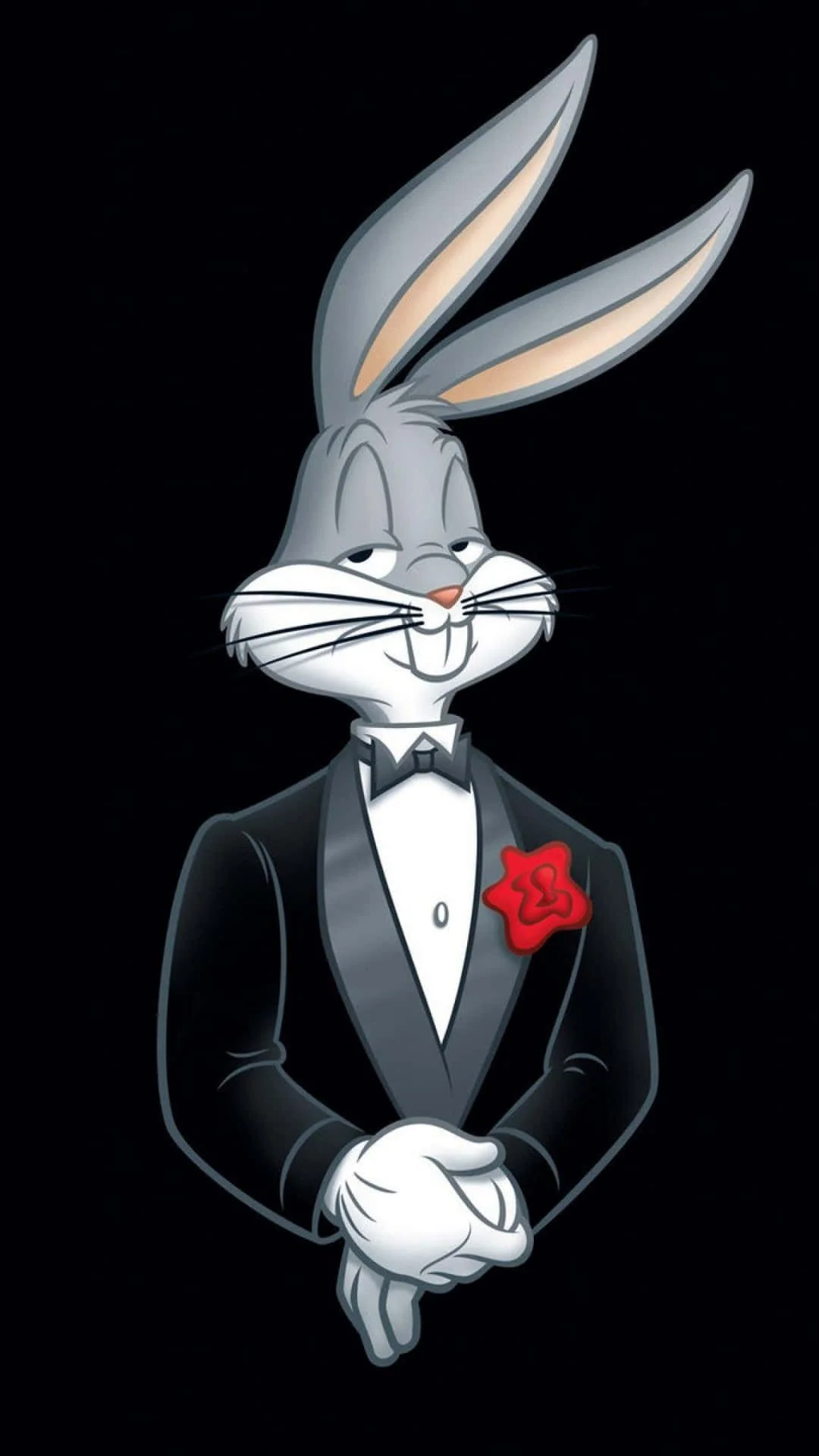
BUGS. HIMSELF. — There’ll never be another. / Warner Bros. cartoons
George of the Jungle, Underdog and Porky Pig. They were part of the Golden Age of Cartoons, and, certainly, America.
The modern cartoons? They often worship, and tout, the darker, twisted and even evil sides of ourselves. They mock essential, good and noble values, paint them as corny.
They are relentlessly unclever. They make light of doing the right thing, of becoming the hero. They lack class.
My dad was a hero. He not only fought to save civilization in World War II, he was a blessing to others. It always warmed my heart. Dad was such a serious guy, but, sometimes, we’d watch cartoons together and a smile would crease his face and he just simply would burst out laughing. We both would.
I feel this change in the air. I hope we can turn around not just our country, but this community of ours, which is so dialed in to the powerful waterfall of media and a messaging, much of it owned and broadcasted by disturbed, twisted, hypocritical people. Pornography used to be something deeply buried and out of sight from most. Today? We spoon feed it to our children.
We deserve better heroes, in cartoons, in real life …

• The End •
Copyright 2026 • John Boston and John Boston Books. All rights reserved.